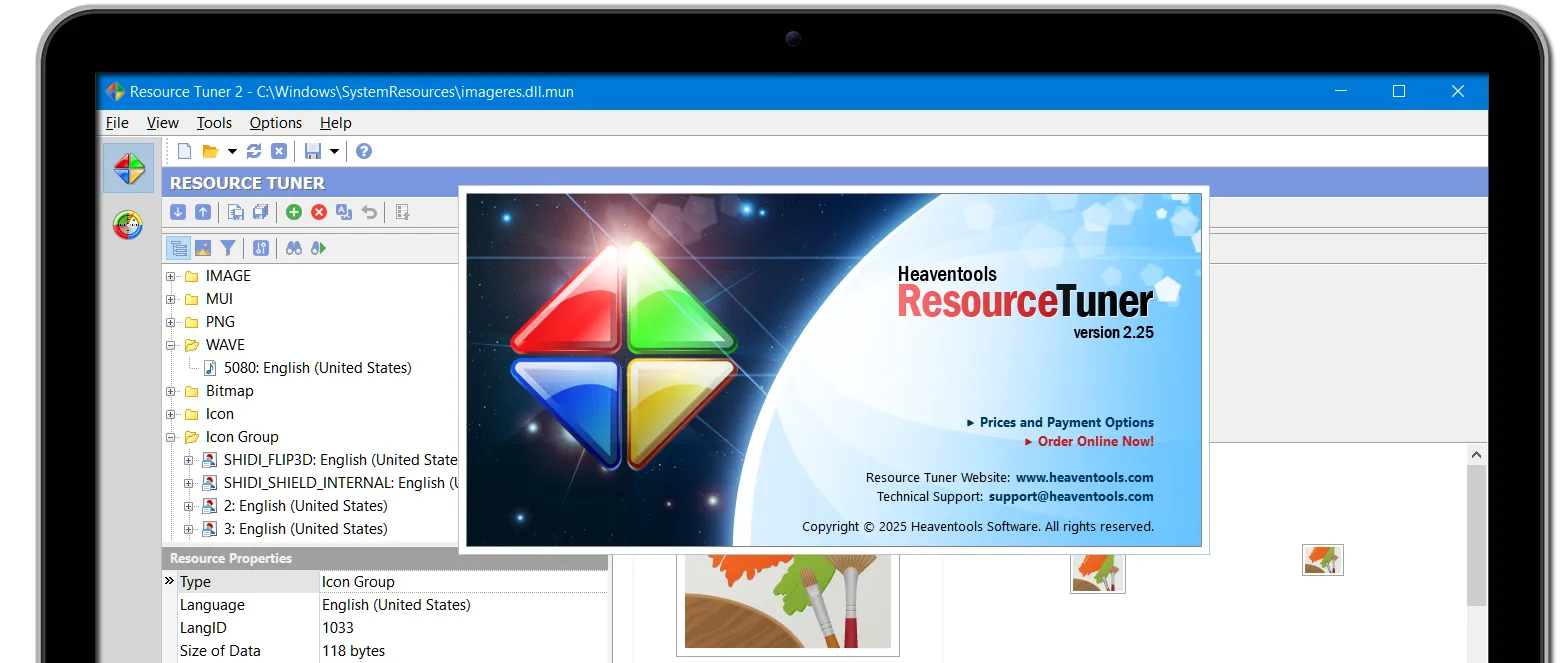
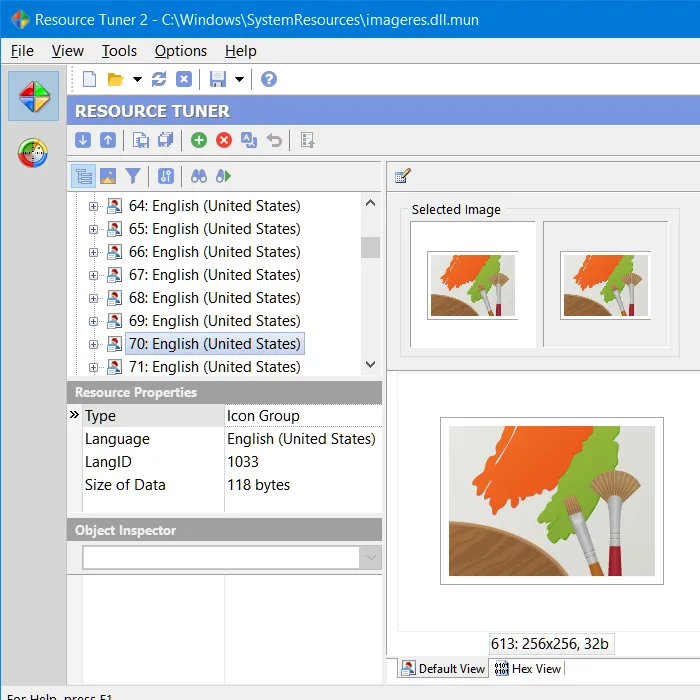
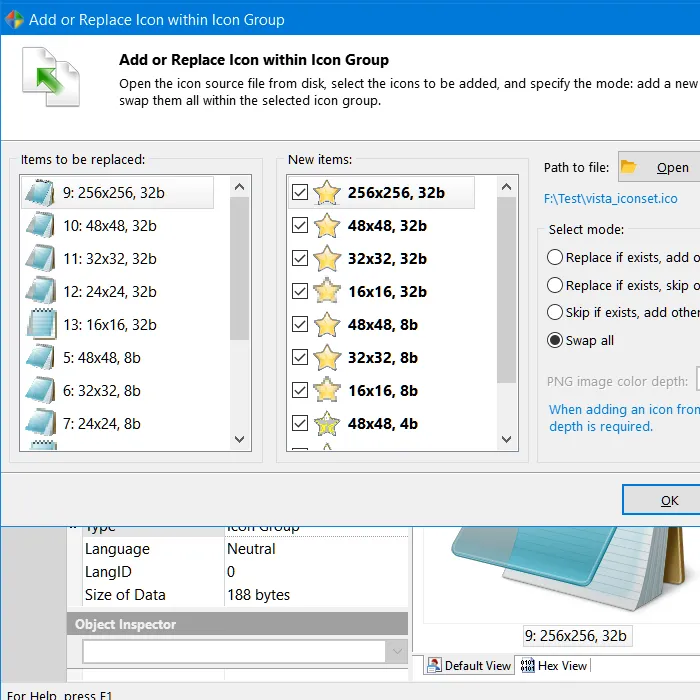
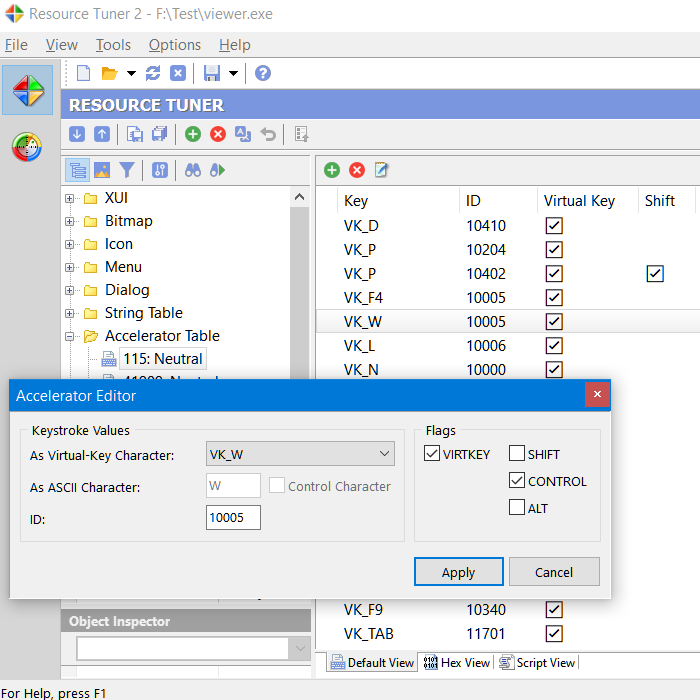
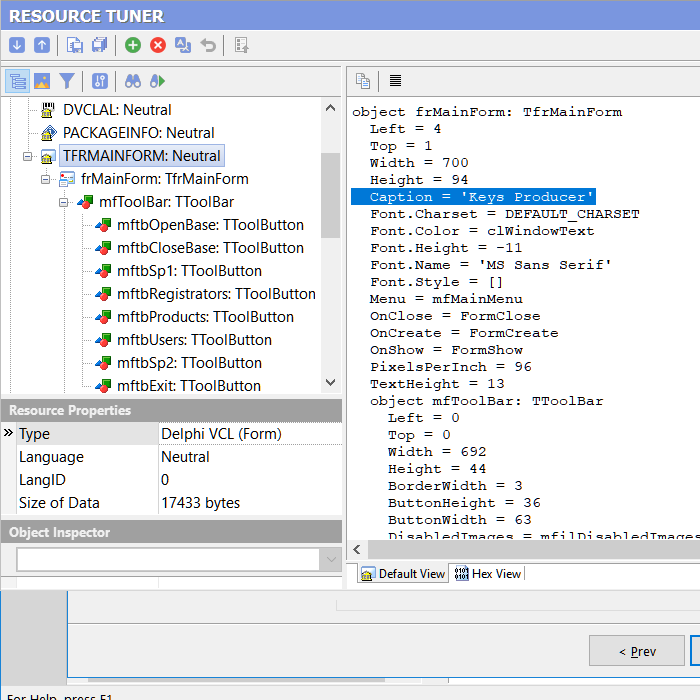
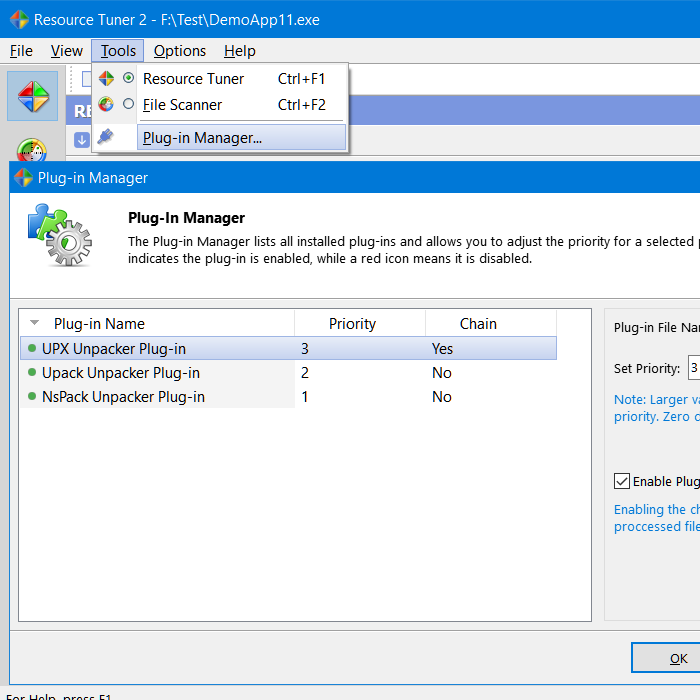
Get yourself one of the most popular Resource Editors out there and tweak your app’s resources, from icons to version data, in just a few clicks.
Resource Tuner — version 2.31 for
Windows 11/10/8/7/XP.

$49.95 per user
The Personal (Home) License allows you to use the program for non-commercial purposes in a non-business, home environment.
One-time payment, no recurring fees.
$89.95 per user
The Business License allows usage of the program in a business, academic, or government environment, applicable to both individuals and companies.
One-time payment, no recurring fees.
Resource Tuner runs on all versions of Windows, including 11, 10, 8, 7, Vista, and XP, and supports both 32-bit and 64-bit systems.
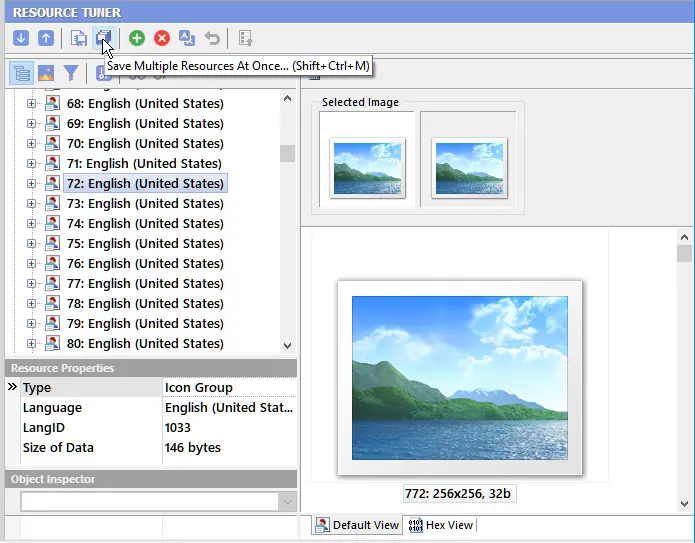
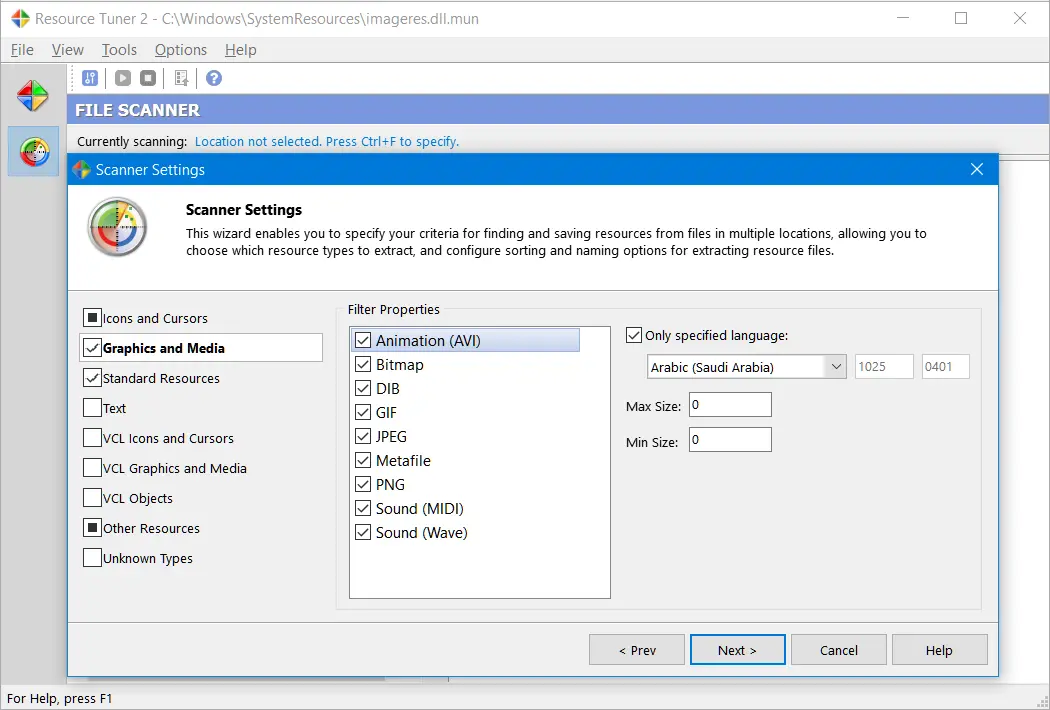
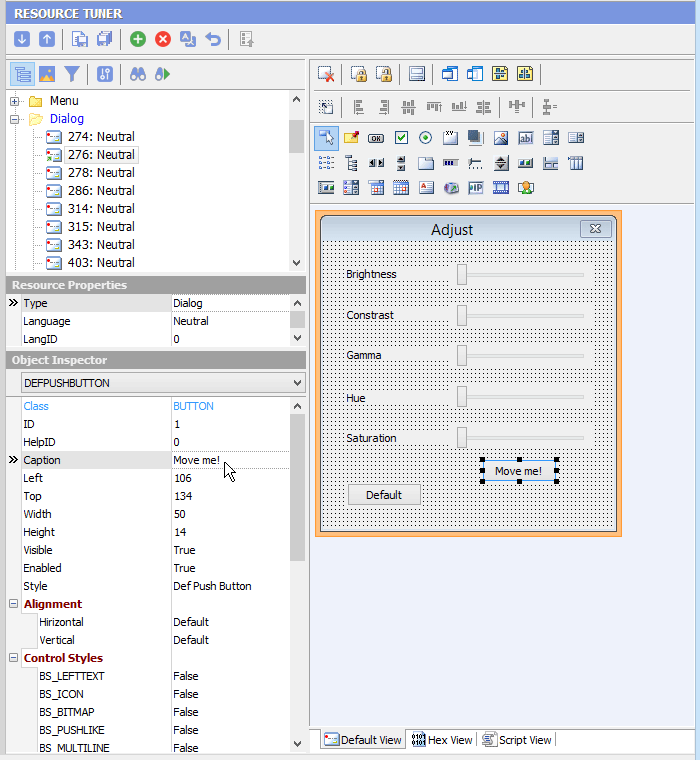
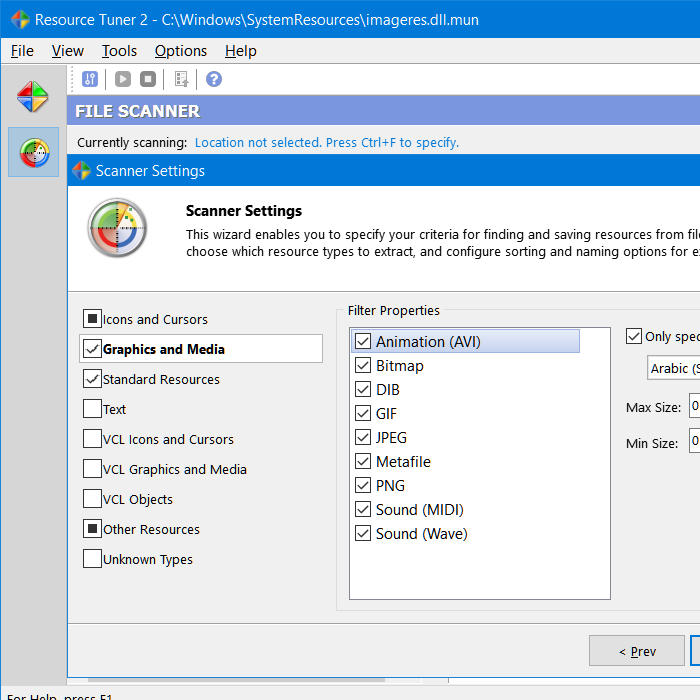
Resource Tuner offers a thorough look at all of the resources (bitmaps, jpeg, icons, strings, dialogs, PNG compressed icons, XML, Image Lists, Type Library, version information) in the compiled executable file, and allows you to make modifications without needing to recompile the source code.
The transgender community continues to push the boundaries of what is possible within LGBTQ culture. As the movement moves forward, the focus remains on . True progress in LGBTQ culture is now measured by how well it supports its most marginalized members—specifically trans women of color—ensuring that "Pride" is a lived reality for everyone, not just those who fit into a heteronormative mold.
More than 1 in 3 LGBTQ Americans faced discrimination in 2024, a figure that rises to 3 in 5 for transgender individuals [7, 15].
: The trans experience is heavily influenced by other identities. For example, Black transgender people face unemployment rates four times higher than the general US population, revealing "layered oppression" even within queer spaces. American Psychological Association (APA) Ongoing Challenges
The transgender community continues to push the boundaries of what is possible within LGBTQ culture. As the movement moves forward, the focus remains on . True progress in LGBTQ culture is now measured by how well it supports its most marginalized members—specifically trans women of color—ensuring that "Pride" is a lived reality for everyone, not just those who fit into a heteronormative mold.
More than 1 in 3 LGBTQ Americans faced discrimination in 2024, a figure that rises to 3 in 5 for transgender individuals [7, 15].
: The trans experience is heavily influenced by other identities. For example, Black transgender people face unemployment rates four times higher than the general US population, revealing "layered oppression" even within queer spaces. American Psychological Association (APA) Ongoing Challenges